

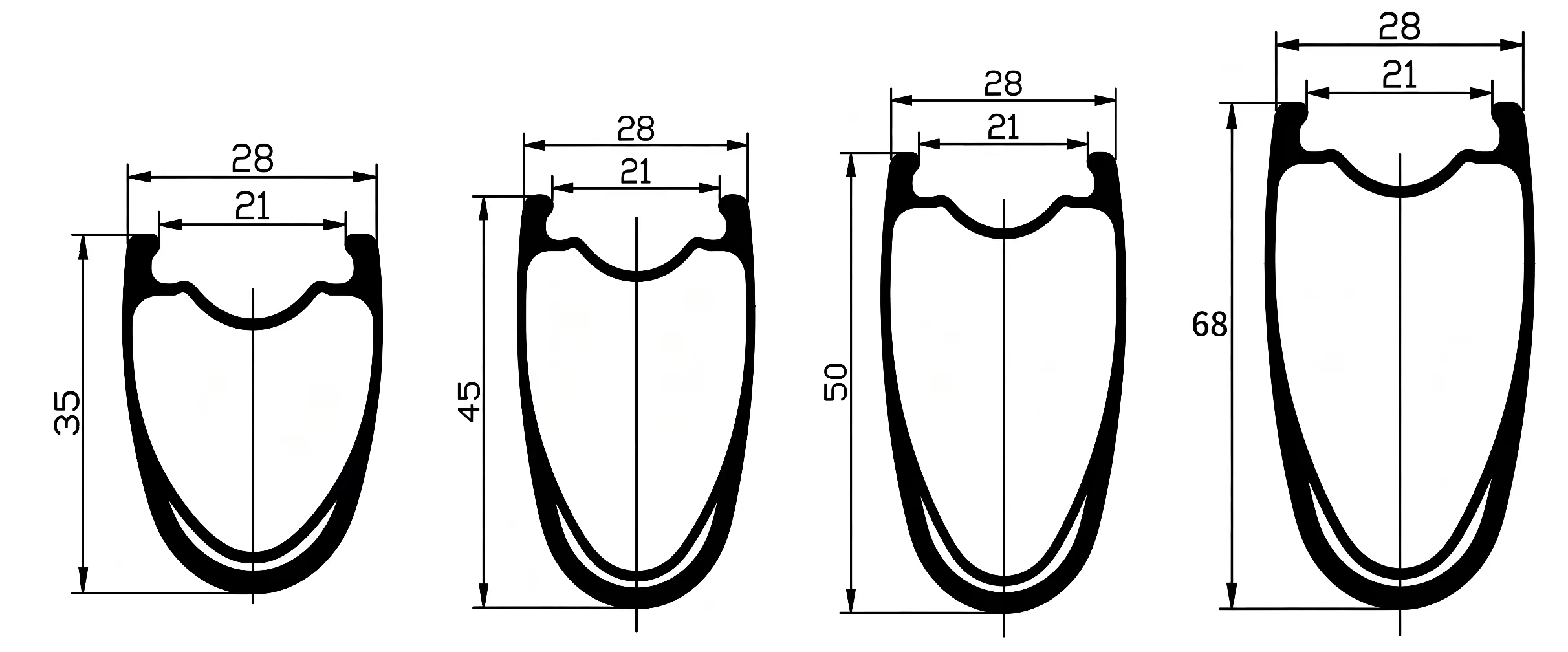

Rim Material---lightweight, Stiff, and Tunable Cross-Section
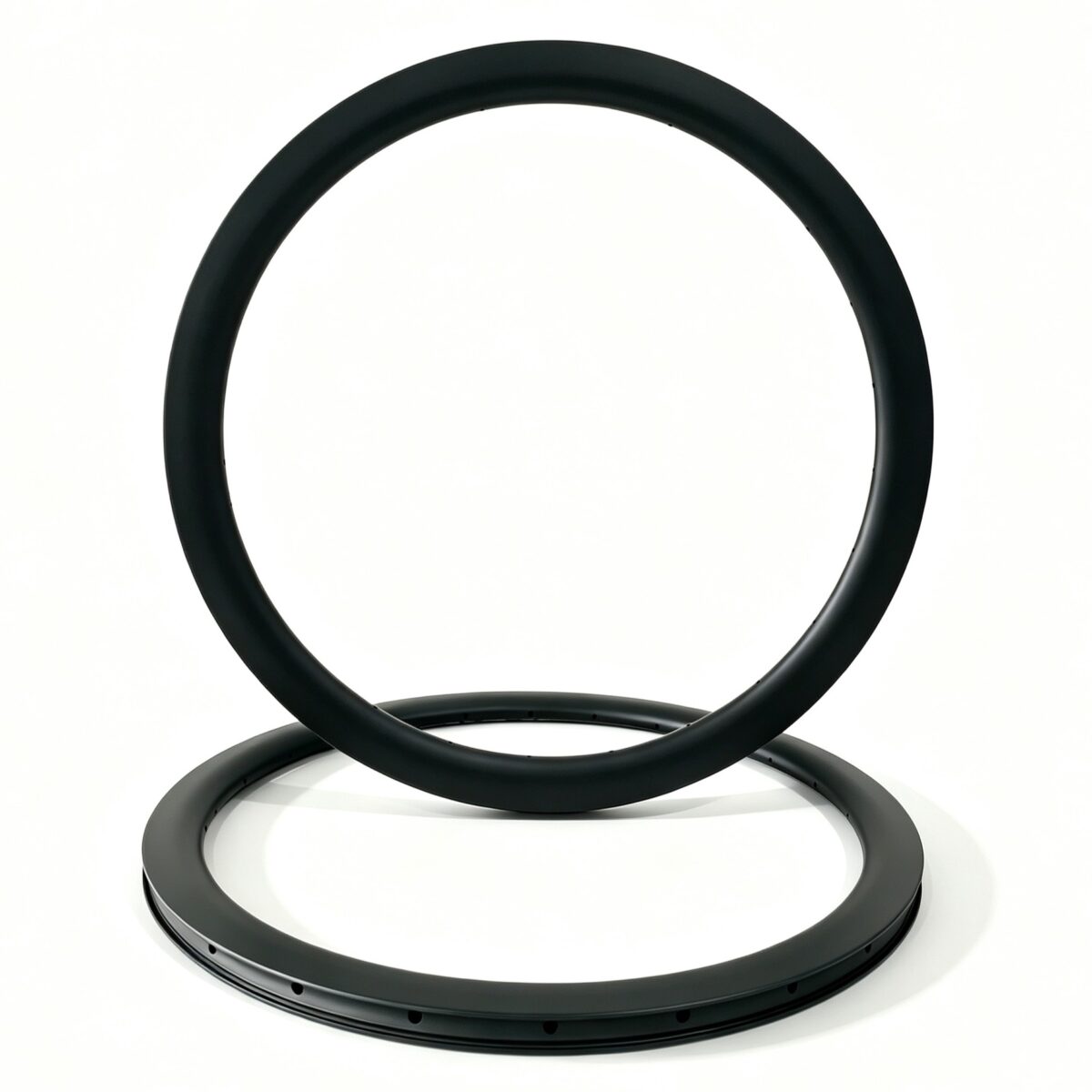
Rim-brake carbon fiber rims use layered carbon construction to achieve low weight with high lateral and torsional stiffness, so pedaling input is transferred efficiently. Carbon layup and molding also allow the rim profile to be tuned for aerodynamic, climbing, or all-round use. Lightweight does not mean flexible—proper layup design is what maintains a stable ride feel while reducing weight.
Brake Track: Dedicated Surface, Heat-Resistant Resin, Thermal Management
The brake track on a carbon rim-brake wheel is designed for use with carbon-specific brake pads and offers clear, modulated braking feel in dry conditions. Because carbon conducts heat less effectively than metal and the resin matrix is temperature-sensitive, the brake track usually features heat-resistant resin, surface treatment, and heat-dissipation design to reduce overheating during prolonged braking. Riders should use intermittent braking and allow cooling on long descents instead of dragging the brakes continuously.

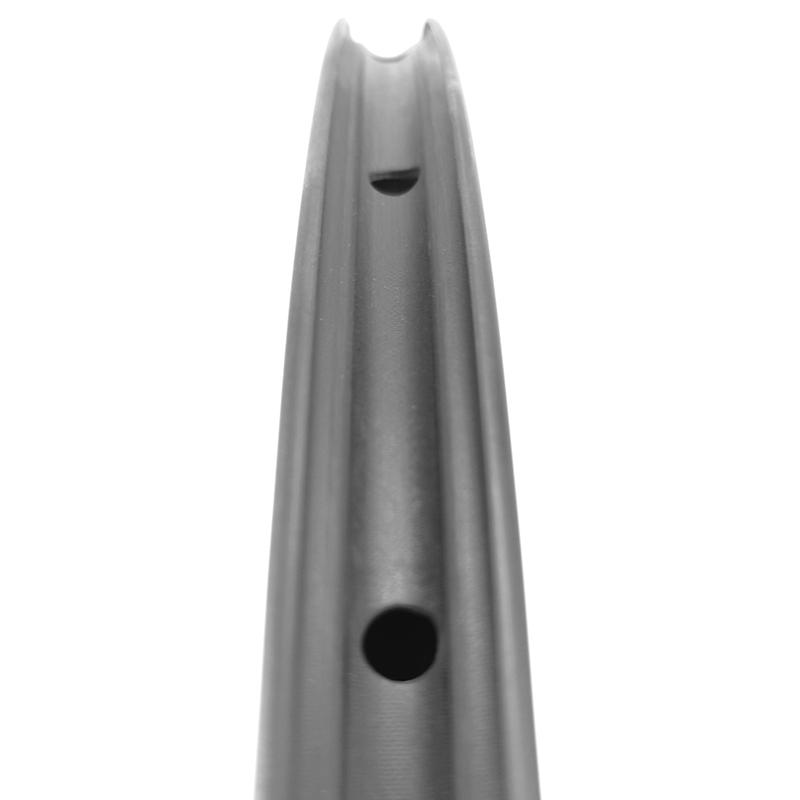
Tire Compatibility: Clincher / Tubeless
These rim-brake carbon rims are typically available in clincher and tubeless-compatible versions. Clincher setups use an inner tube and are straightforward to install and maintain; tubeless setups use a sealed bead, rim tape, and tubeless valve to form an airtight system, which can reduce rolling resistance, improve puncture resistance, and allow lower tire pressure for better road feel. When buying, confirm the specific model’s bead profile, maximum tire pressure, and factory tubeless compatibility—do not assume every carbon rim supports all tire types.
Reviews
There are no reviews yet.